
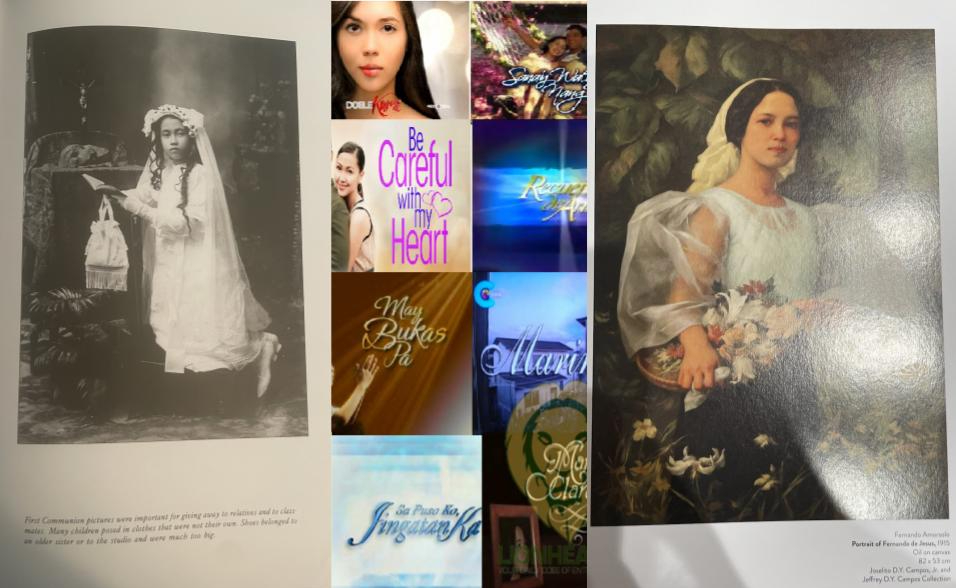
Featured Image: LIST- Top 21 Longest Running Kapamilya Weekday Series
Overview
The namesake and strongest inspiration for this section, Judith Butler’s theory on gender performativity provides us great insight into the makings of a Filipina woman. Butler’s overarching thesis is that gender is a constructed phenomenon, not an inherent and static identity. Western canon has perpetuated an essentialist gender binary that claims a natural, biological divide between men and women. Some attributes such as emotion and weakness are considered feminine while others such as bravery and physical strength are considered masculine. The strict designation between masculine and feminine is problematic in and of itself when we examine gender, as they mostly describe a set of expectations rather than speak to someone’s true personality. Butler believes that gender is created and validated by society; each community sees gender differently. Largely dependent on cultural frameworks, e.g. colonization in the case of the Philippines, gender is attached to specific practices. This is where colonization enters the conversation. Western colonial canon sought to change these individual practices, viewing gender as a concept that dictated one’s entire disposition at birth. In the pre-colonial Philippines, women had tattoos, were warriors, and could inherit land in their own right. After Spanish evangelization, women were expected to submit to men, as they were seen as emotionally and physically weaker, pious, and needy.
Butler explains that gender is all about deferring to the dominant standards of how a man or how a woman should be. She describes gender performance as a series of repeated acts. We commonly observe that when someone does or says something often enough, it becomes true. Since childhood, women are taught to serve. They are taught to be “ladylike” (whatever this may mean): polite, quiet, neat, helpful, patient, and kind. These traits are thought to be womanly, yet when taking a closer look at them, they are just a set of practices that must be obeyed. It is of our utmost interest that Butler considers gender to be an “act”. This claim implies that people are characters, or in other words, archetypes. Returning to the beginning of this course, we learned about female archetypes. We didn’t learn about people but rather “people”.
We often think of performance as a thing we do on a stage: transforming ourselves into a character and reciting lines in costume. However, we must open our minds and think of gender performance as a phenomenon that takes place beyond the theater. As cheesy as it sounds, society is a stage. In the Philippines, this stage is amplified through its various telenovela-like dramas, superficial movies, and beauty pageants broadcast for the entire nation to see. With a culture already deeply set in performance, Filipinos become even more entrenched in fulfilling gender roles. They are characters on the stage as much as they are off of it.
The burden of gender performance is predominantly shouldered by the women. Firstly, women are governed by Western beauty standards. Filipina women yearn for lighter skin and hair and narrow noses, as they are all physical traits of European descent. However, the majority of women of full Filipino heritage have dark hair, tanner skin, and flatter noses. Thus, many, even today, try to imitate being of European descent through bleaching their skin and undergoing plastic surgery. They wish to play the role of the mestiza woman, privileged economically and socially. They complete transformations and perform in a skin that isn’t theirs.
Due to strong colonial influences that still pervade the country today, women still perform for the male gaze. The demure, mestiza woman is still idolized as the protagonist in every story. When this section focuses on gender performativity, it investigates the sinuous interactions between perceptions of beauty, class, and Catholic morality, among other themes too numerous to mention. Gender in the Philippines demands performance. How does one “look” Filipina? How does one “act” Filipina? How does one “be” Filipina? The literature in this unit traverses these illusions and realities.
——-
Supplementary Sources:
**Foundational Text: Gender as Performance– Judith Butler**
Visual Performance:
–Why Some Filipinos Lighten Their Skin, some don’t, and few want to talk about it
–Why People Risk Their Lives to Bleach Their Skin
Mental Performance:
 Paglaban Pilipino Literature Project