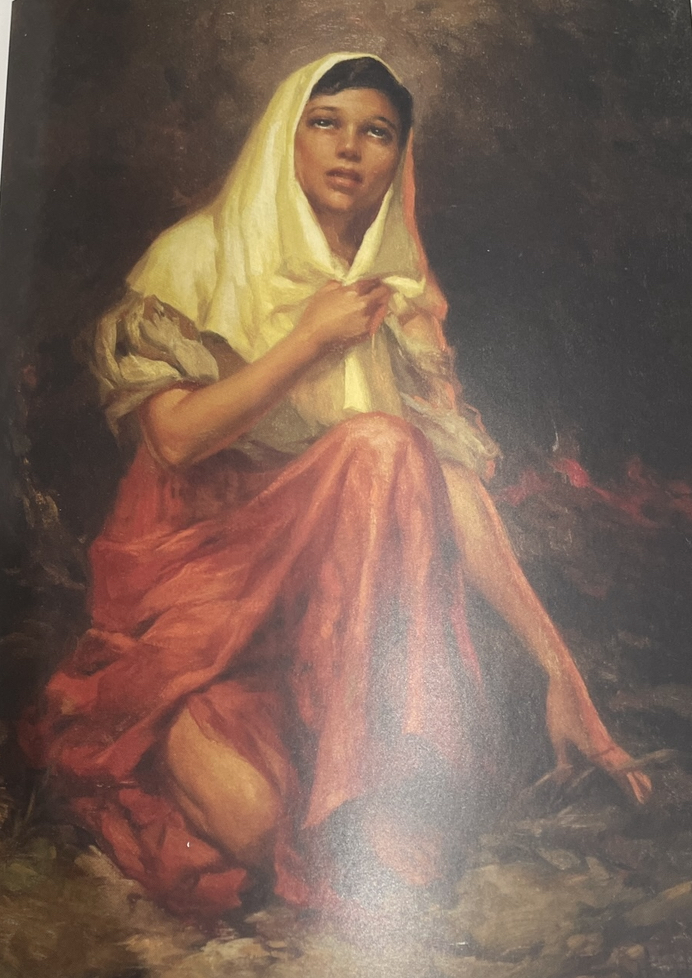
Featured image by Fernando Amorsolo, Maid of Bataan, 1947
Overview
As one of the two predominantly Catholic nations in Asia, the Philippines has been majorly influenced by Christian moral and legal principles. Because of the three-centuries long Spanish occupation, the faith has become ingrained in Filipino culture, making it impossible to understand the country’s sociocultural history without examining the strong impact of the Catholic faith. Dictating societal attitudes towards women, the religion has served as the guiding moral compass by which they should abide. Hence, women are frequently subjected to rules restricting their bodily autonomy. Expected to be pure and virtuous, often citing the Virgin Mary as the ultimate role model, women (even since the Spanish colonial period) have struggled to fulfill society’s expectations. While some women fully embraced the virginal lifestyle (some entering convents or entering an arranged marriage and producing children), others have dared to question Catholicism. This section aims to explore this complex and multifaceted spectrum. In the following texts, note the ongoing conflicts between religious tradition and secularity in addition to themes of female agency and motherhood.
——-
Supplementary Sources:
Catholicism in the Philippines during the Spanish Colonial Period 1521-1898
Catholicism in the Philippines
Filipino American Culture and Catholicism are interconnected. How that affects mental health
 Paglaban Pilipino Literature Project