
The Ex-Wife
Essay by Sylvia Mendez Ventura (pp. 104-115)
Ventura writes, “only the rejected wife knows how it feels to be unwanted.” In the Philippines, absolute divorce is illegal. (In pre-colonial times as well as during the Japanese occupation, divorce was legal.) Currently, only separation is permitted. Despite religious annulments, the formal separation possesses no legal standing. Informal separation from one’s spouse is still an ordeal even though no legal processes are involved. It comes with a host of ideas and expectations. Firstly, the marriage must be intolerable in order to seek separation. Secondly, the woman must consult her children and family for “permission” to separate. Lastly, if the woman wishes to re-enter the dating scene, she is only allowed to date separated men.
The Child of Separation
Essay by Sylvia Mendez Ventura (pp. 125-136)
In addition to causing strain for the ex-wife, the child experiences similar stigmas that they must navigate. Primarily, the child feels the need to protect their pride; it is preferable to say that the missing father died rather than the fact that he left the family. Growing up, adolescent males frequently turn to delinquency due to their father’s absence. After entering adulthood, they must combat the argument that children of broken homes are thought to be poor candidates for marriage, as the children are believed to be carbon copies of their parents (in their strengths as well as their fatal weaknesses).
The Old Maid
Essay by Nicanor G. Tiongson (pp 137-146)
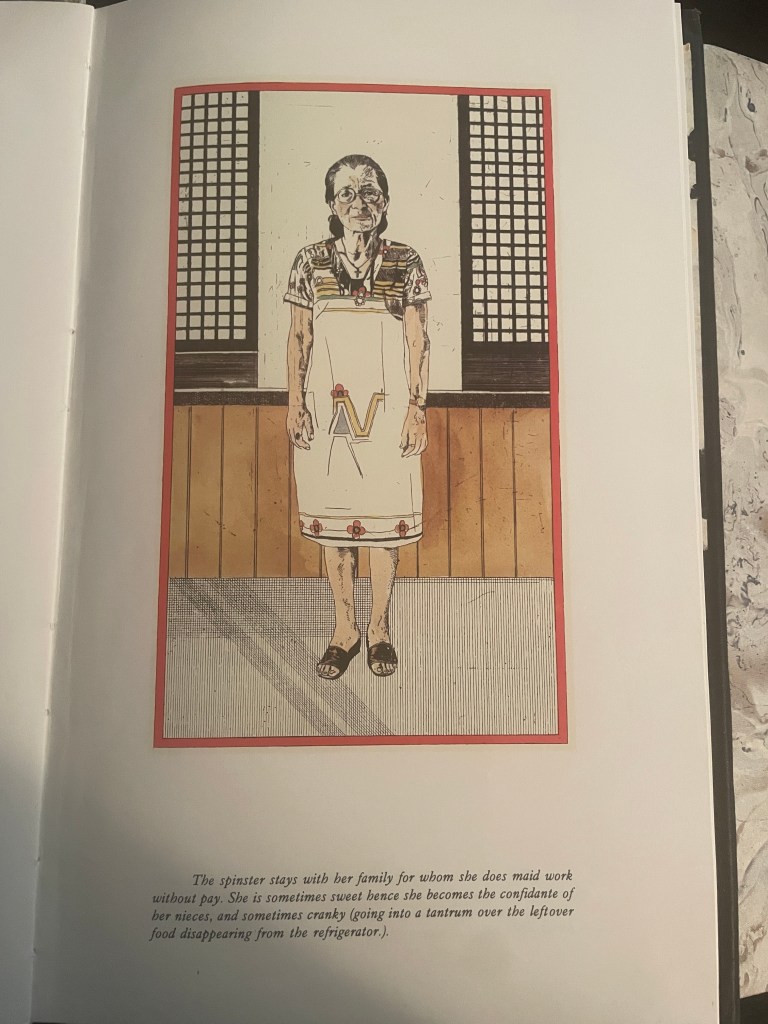
Often referred to as “the spinster aunt”, this older woman is both pitied and admired for her loneliness that some would call independence. She is frequently the elderly sister of the mother or father. Although some Filipinos believe that spinsterhood is not something that a woman can choose on her own free will, more contemporary opinions argue that marriage is the final test that determines a “good” woman. Tiongson writes that, “Since society has thus exiled old maids to a vale of tears in this as in the life beyond, spinsterhood has become the plague that most Filipinos want to avoid at all costs”. Yet, despite this “plague”, spinsterhood can be considered a vital institution. Teachers, managers of homes, nurses, maids, and social workers are all essential professions of “old maids” that keep society running.
The Widow
Essay by Lorna Kalaw Tirol (pp. 147-155)
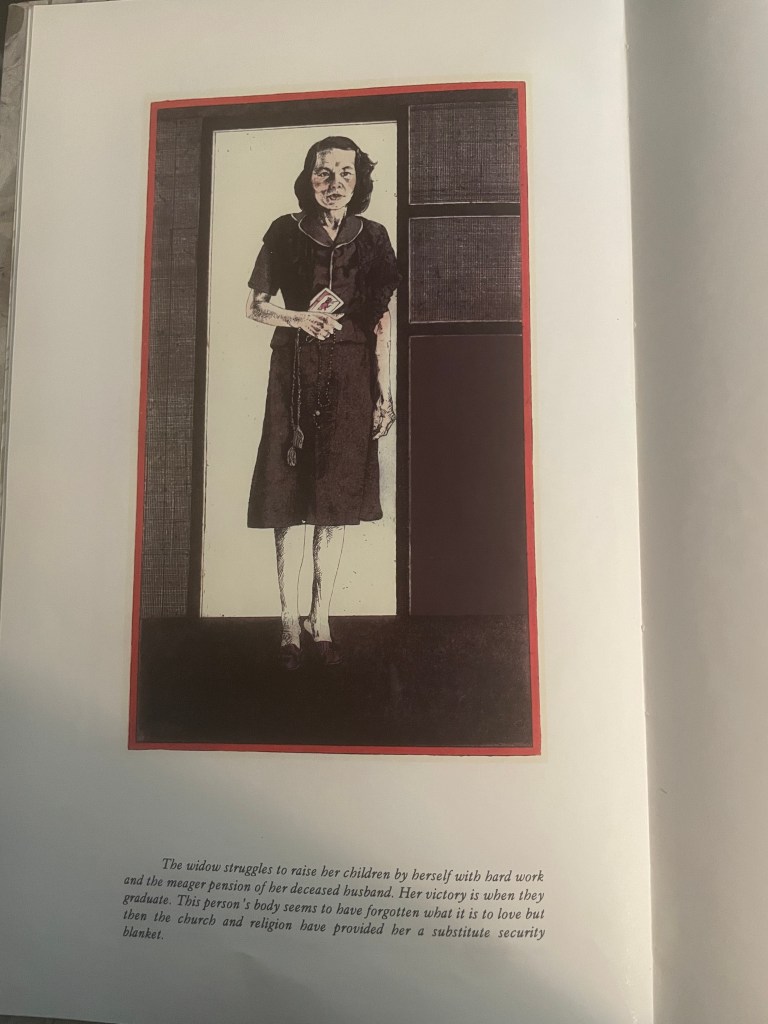
Specifically for women, widowhood provides more opportunities for independence. Because a woman must support her family, she is able to step outside the home. While working, she may discover hidden capabilities or passions, giving her a sense of purpose, accomplishment, and worth that the patriarchy might have tried to stifle during marriage. As a result of her job, she may find herself in a new socioeconomic class and the freedoms that come with it. Tirol writes, “As the widow pulls herself together and faces the future, she has to decide how she will play her new role. After all, in Philippine society, the widow is some kind of cultural heroine” .
 Paglaban Pilipino Literature Project