

The Wife
Essay by Mary Racelsi Hollinsteiner (pp. 37-53)
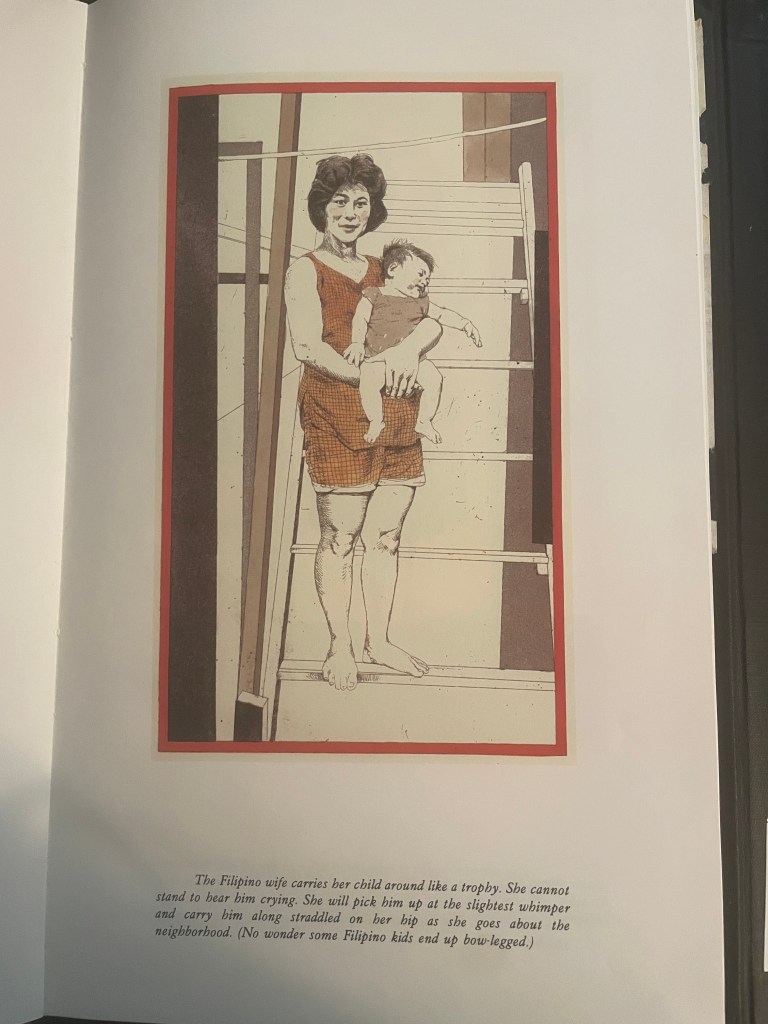
Above all else, the wife must be faithful to her husband although he is not expected to reciprocate. (Adult woman status comes with marriage; women are encouraged to get married before age 25.) Her marriage is not “complete” until she bears children, which truly marks the union of the two families. Despite sex being a marital obligation, a woman is not supposed to enjoy sexual activity, as this makes her a “bad woman”.
As a result of Spanish Catholicism, a marriage depends on the “naturality” of maleness and femaleness. What this exactly means is up for interpretation, but it paves the way for machismo and the female cult of domesticity. There is a double standard where a man can “make an honest woman” out of a “disgraced pregnant girl”. However, a man can engage in extramarital affairs so long as he supports the family. The wife is supposed to obey without questions and consult her husband concerning anything regarding family planning (i.e. abortion and contraception).
Until now, the explanation of a woman’s role in marriage provides a one-dimensional view of a very complex phenomenon. Other factors come into play such as education (educated women marry later), urban versus provincial lifestyles (city versus country), and social class (women are expected to marry up). All of this is not to say that women lack agency in their marriages. Nevertheless, the Philippines being a conservative Christian nation, women are pressured into abiding by societal expectations in order to avoid ostracization. The wealthiest, most educated of women still must take care of the children and their home to some degree.
Quick Notes:
- Common law marriage is mostly reserved for poorer women. Living with her significant other for a long time signifies marriage.
- Vocabulary words: kabit-mistress, anak sa labas- illegitimate children
The Lesbian
Essay by Arlene P. Babst (pp. 91-103)
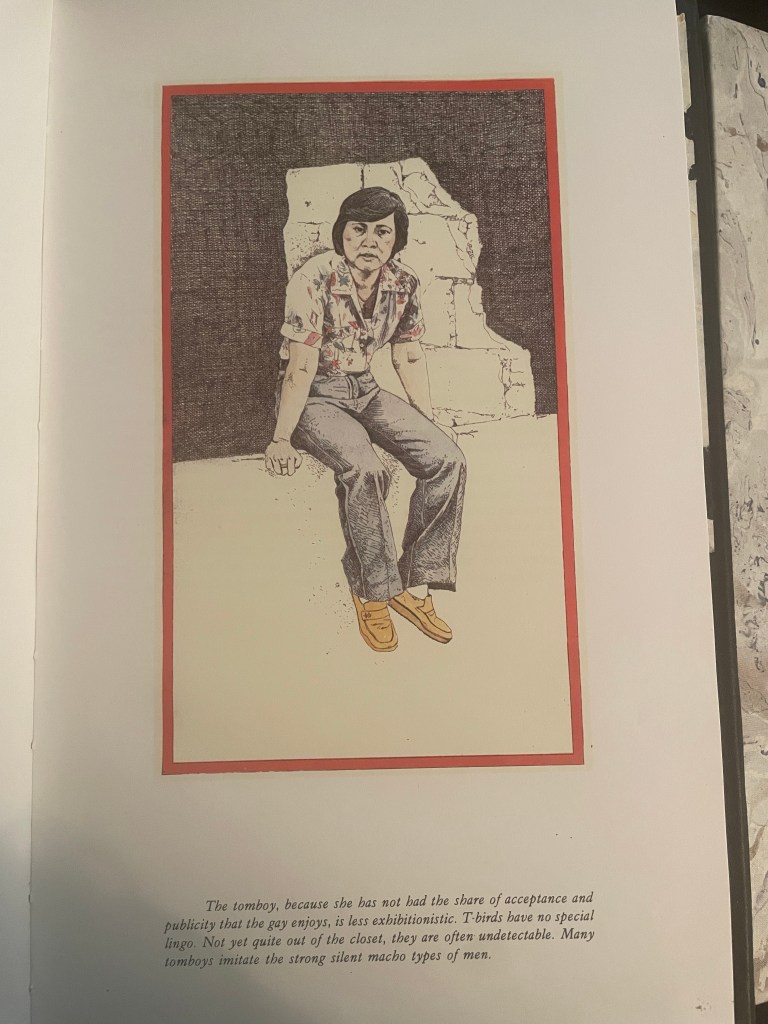
Frequently the subject of ridicule, lesbians are often told that their sexuality is a phase, that they will eventually grow out of their attraction to women. The term used to describe them is “tomboy” for their perceived “masculine” qualities (i.e. “butch”). Babst writes that many young lesbians develop their first crush on their female school teacher, as many girls go to all-female convent schools. Maybe Tomorrow (2017) by director Samantha Lee is a contemporary Philippine film that seeks to break harmful LGBTQIA stereotypes.
The Lover and Mistress
Essay by Carmen Enrile Santiago (pp. 60-77)
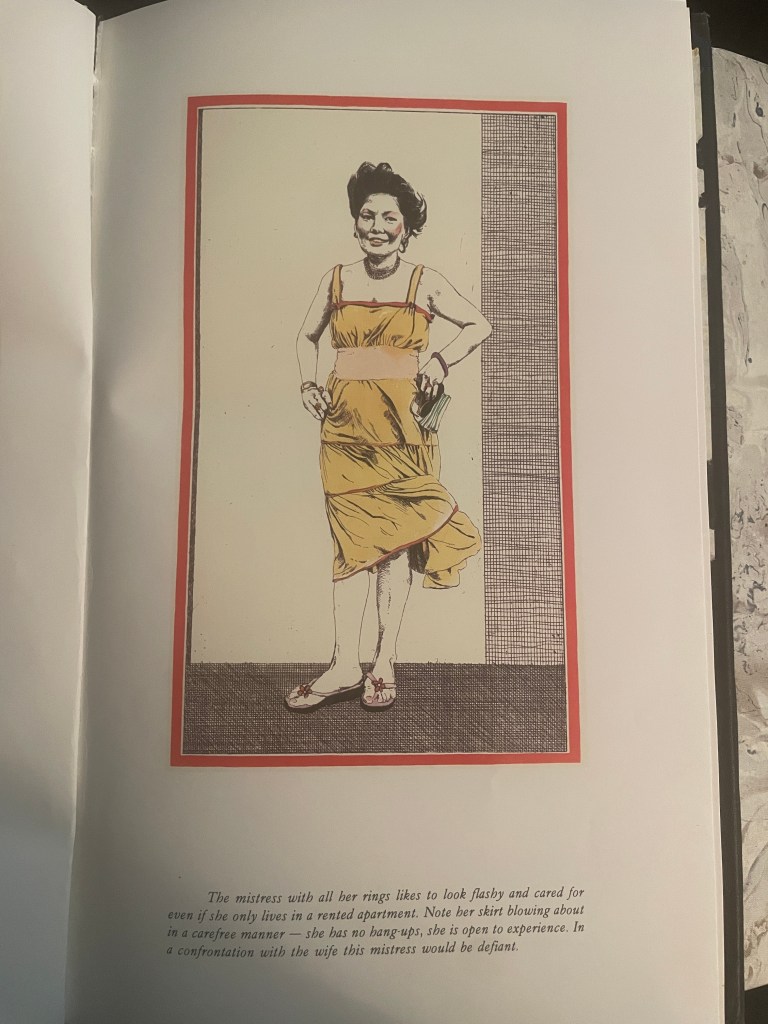
Mistress culture in the Philippines is an entire topic for discussion. As the only country in the world where divorce is illegal, men often have other families during their marriage to their legal wife. While society normalizes a Filipino man galavanting about and flirting with other women, the wives are expected to keep silent and cover up for their husbands so his children still respect him. It is common for the wives to know about the mistresses. As mentioned, since divorce is illegal, affairs are “permitted”. With this occurrence, we witness another double standard: women cannot engage in extramarital affairs. Before Spanish colonization, polygamy was practiced by men and women. Upon converting to Catholicism, women had to become monogamous, and they lost their sexual autonomy. As a result of the mistress culture, there exists the concept of an open marriage, but only for men.
The mistress is frequently demonized in literary portrayals. She is portrayed as a temptress and gold digger who lacks morals. She is seen as the homewrecker, shouldering all the blame for a man’s actions. The mistress is almost considered subhuman, a “release of baser instincts [for men]”. She is simply a sex object, never wife material. On the other end, the wife always carries the blame for “forcing” the husband to leave. As Santiago writes, “Women of generations past, in fact, were taught that infidelity was not only unavoidable, it was part of the male’s psychological makeup”.
 Paglaban Pilipino Literature Project