

The Mother
Essay by Lourdes V Lapuz (pp. 9-13)
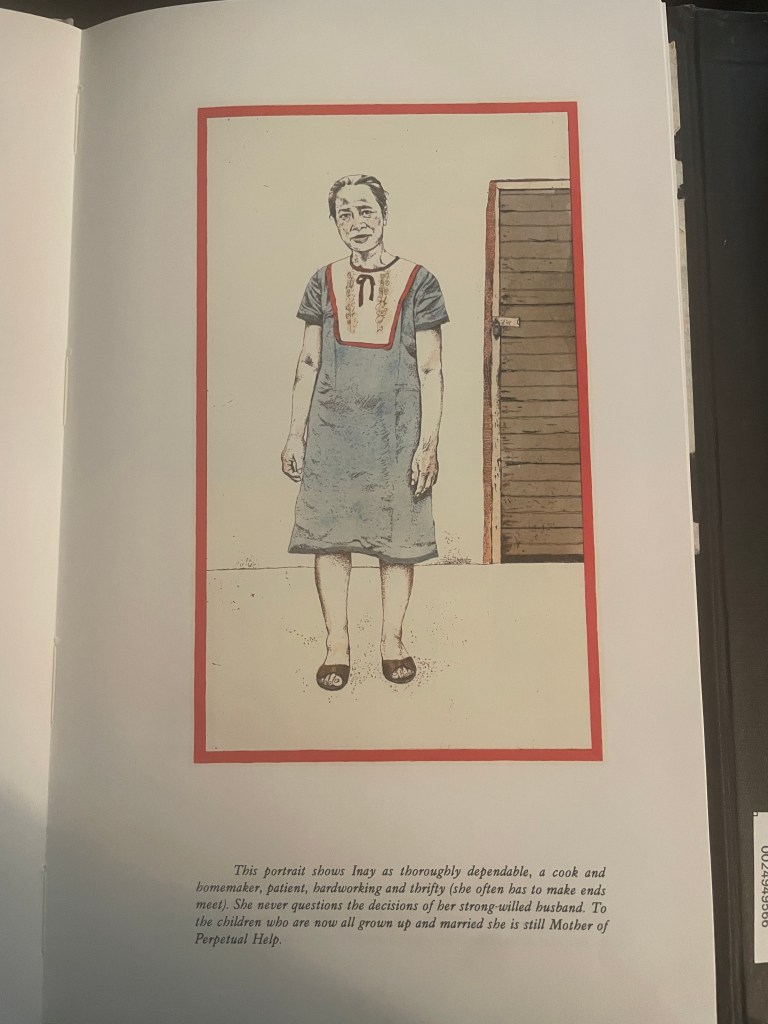
Her principal role is to care for others. From a young age, she is encouraged to care for her younger siblings in order to prepare her for motherhood. She is known for being the more affectionate parent, yet she can serve as the disciplinarian. There is a unique bond between mother and son, as she tends to baby him as long as she can. Meanwhile, daughters are expected to mature and marry quickly, as pregnancy seems to solidify one’s womanhood. Regardless, the mother takes care of her children with the (hopeful) expectation that her children will take care of her when they establish their own households. A seemingly inconsequential, yet important fact, breastfeeding is a marker of true motherhood.
The Child
Essay by Carmen Enrile Santiago (pp. 19-26)
First and foremost, children are meant to be seen and not heard. Childhood is a careful balance of dependence (consulting parents during decision making) and independence. After age five, parents tend to emphasize the sexual differences of their children. Girls are expected to be miniature mothers: caring for siblings, preparing vegetables, and cleaning. Her childhood ends when she begins her period. (The eldest sister is not permitted to marry until the youngest graduates high school.) Boys are expected to act like their fathers, working in the fields or continuing the family trade.
The Female Adolescent
Essay by Lourdes V Lapuz (pp. 27-)
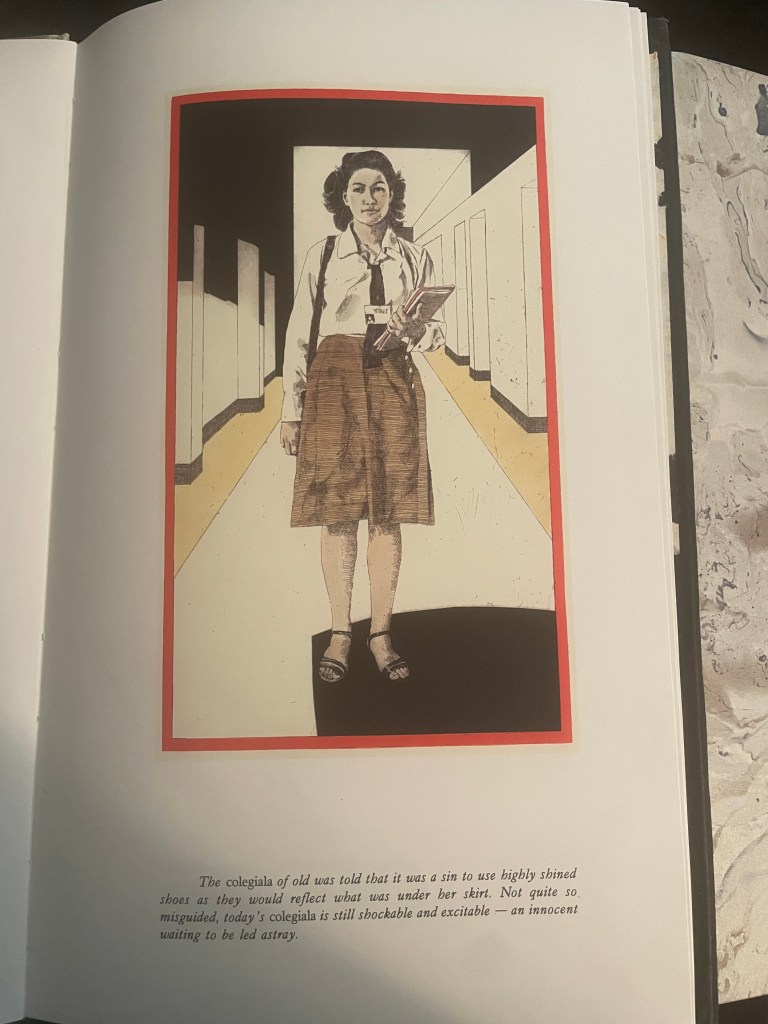
During this period of time, the teenager undergoes puberty and becomes curious about her sexuality. Yet, the conservative, Filipino-Catholic society dictates that she is too innocent to know anything about sex. Hence, much of sex education (at least for women) occurs privately between the girls themselves. To the outside world, though, she must feign ignorance to not arouse suspicion that she is “loose” or “immoral”. Lapuz writes, “The discrepancy between the Filipina’s carefully cultivated conservative image and her actual sexual behavior is dramatic indeed. Southern European tradition decrees that an unmarried woman is either a virgin – or a whore. This double standard of morality which the Filipinos have inherited from Spain ensures that female sexual realities are driven underground.” Meanwhile, she becomes aware of societal beauty standards where Caucasian features are valued while more indigenous features (e.g. dark skin, flat nose) are scorned. Sexual liberation, for some conservatives, is still akin to prostitution.
 Paglaban Pilipino Literature Project